In today’s fast-paced digital world, the term “rub ranking” has been popping up across various platforms and discussions. But what exactly does it mean? Simply put, rub ranking refers to a system or methodology used to evaluate, compare, and assign positions or scores to items, individuals, or entities based on specific criteria. While it might sound complex, the concept is rooted in simple principles of assessment and prioritization. Whether you are a business owner, a gamer, a researcher, or just someone curious about ranking systems, understanding can help you make smarter decisions and interpret results more effectively.
The reason rub ranking is gaining popularity is that it’s highly adaptable. Unlike traditional ranking systems that focus solely on one metric, rub ranking often incorporates multiple factors. These factors can range from performance, quality, or engagement to more subjective measures such as popularity or influence. This makes it a versatile tool for many industries and purposes, from evaluating products online to ranking competitors or even analyzing personal performance metrics.
At its core, rub ranking is all about clarity and transparency. By defining clear criteria and following a structured evaluation process, it allows for consistent results that can be communicated easily. In this article, we’ll explore how rub ranking works, its different types, its benefits, and tips for applying it in real-life scenarios.
What Is Rub Ranking and Why Does It Matter?
Rub ranking is more than just a number or position—it’s a system designed to create meaningful comparisons. Imagine you have a list of products, services, or even employees. Simply labeling one as “best” and another as “worst” doesn’t provide actionable insight. Rub ranking, however, breaks down the evaluation process into measurable and understandable components.
The importance of rub ranking lies in its ability to reduce subjectivity. In many fields, opinions can vary widely. What one person considers excellent, another might see as average. Rub ranking addresses this by establishing clear benchmarks and measurable criteria. For example, in product reviews, rub ranking might consider factors like durability, price, design, and user feedback to assign a comprehensive score.
Additionally, rub ranking is an excellent tool for decision-making. Businesses can prioritize which products to launch, marketers can identify the most influential campaigns, and individuals can measure personal progress. It provides a structured framework that transforms vague assessments into precise and actionable insights.
Types of Rub Ranking Systems

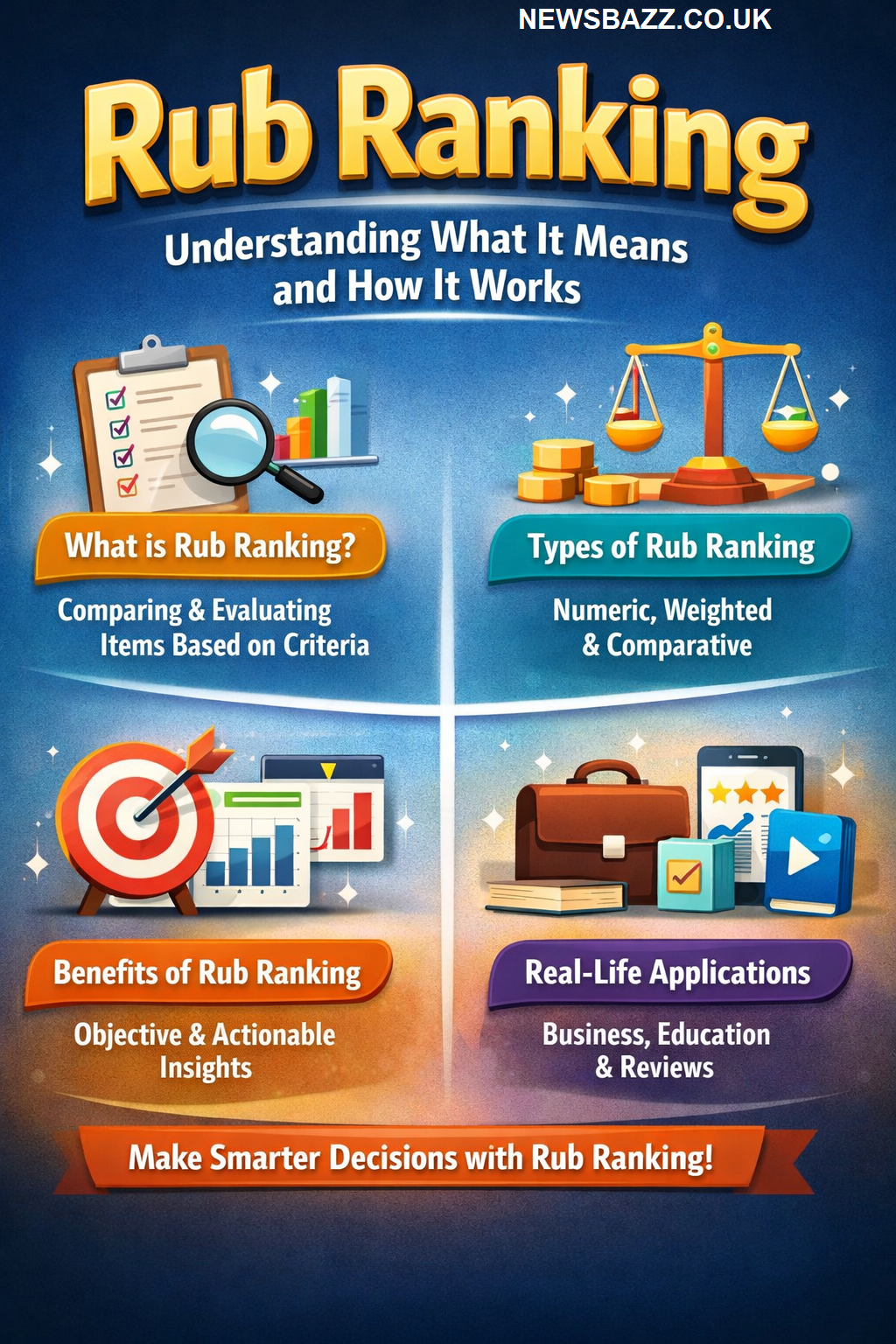
Rub ranking isn’t one-size-fits-all. Depending on the purpose, there are multiple ways to structure a rub ranking system. The most common types include numeric ranking, weighted scoring, and comparative ranking.
Numeric Ranking: This is the simplest form, where items are assigned a score or rank based on their performance against a single criterion. For example, a mobile app might be rated from 1 to 10 based on user experience alone. While straightforward, numeric ranking may oversimplify complex evaluations.
Weighted Scoring: This method allows for multiple criteria to be considered, with different weights assigned to each. For instance, if evaluating laptops, battery life might have a weight of 40%, performance 35%, and price 25%. The final rub ranking combines all weighted scores, providing a more nuanced evaluation.
Comparative Ranking: This approach focuses on pairwise comparisons between items. Instead of assigning scores in isolation, each item is compared to every other item in the list. While more time-consuming, comparative ranking often leads to highly accurate and fair results.
Each type has its advantages and drawbacks. Choosing the right method depends on the complexity of the items being evaluated and the intended outcome of the ranking.
Benefits of Using Rub Ranking
Rub ranking offers several key benefits that make it a valuable tool for businesses, researchers, and individuals alike. One of the main advantages is objectivity. By defining clear evaluation criteria and following a structured process, rub ranking reduces bias and ensures that results are consistent and fair.
Another benefit is actionable insights. Unlike a simple “top 10” list, a provides detailed feedback on each item’s strengths and weaknesses. This information can guide decisions, whether it’s improving products, optimizing strategies, or refining personal skills.
Flexibility is another standout advantage. Rub ranking can be applied to virtually anything: online content, software tools, employees’ performance, sports teams, or even personal goals. Its adaptability makes it useful across industries and disciplines.
Finally,enhances transparency. When stakeholders understand the criteria and methodology used, they are more likely to trust the results. This is especially important in collaborative environments where decisions impact multiple parties.
How to Create an Effective Rub Ranking System
Creating a successful rub ranking system requires careful planning and a methodical approach. Here are the steps to build an effective system:
- Define Clear Criteria: Identify the factors that matter most. These should be specific, measurable, and relevant to the items being ranked. For example, if ranking content creators, criteria might include engagement rate, content quality, consistency, and audience growth.
- Assign Weights: Not all criteria are equally important. Determine which factors should carry more influence in the final score and assign appropriate weights.
- Score Items Accurately: Evaluate each item based on the defined criteria. Use consistent scoring methods to ensure fairness.
- Calculate Final Ranking: Combine the scores according to your chosen method, whether numeric, weighted, or comparative, to produce a final rub ranking.
- Review and Adjust: Periodically review the system to ensure it remains relevant and accurate. Criteria, weights, or scoring methods may need adjustments based on changes in the environment or objectives.
By following these steps, you can ensure that your system delivers meaningful, actionable, and trustworthy results.
Common Mistakes to Avoid in Rub Ranking
While rub ranking is a powerful tool, mistakes in implementation can undermine its effectiveness. One common mistake is using unclear or subjective criteria. If the evaluation factors are vague, results may vary depending on who performs the ranking.
Another pitfall is overcomplicating the system. While weighted or comparative methods are more detailed, adding too many criteria or excessive complexity can lead to confusion and inconsistencies.
Lastly, ignoring regular updates can make your outdated. Over time, priorities and standards change, so it’s essential to revisit your system and ensure it reflects current goals and conditions.
By avoiding these mistakes, you maintain a fair, transparent, and practical rub ranking system.
Real-Life Applications of Rub Ranking
Rub ranking isn’t just a theoretical concept—it has practical applications in many areas. In the business world, companies use to prioritize projects, evaluate suppliers, or assess employee performance. For instance, HR departments may create to identify top-performing employees or determine training needs.
In education, is commonly used to grade assignments, evaluate research projects, or compare schools and universities. By setting clear evaluation criteria, educators ensure fair and consistent assessments.
In the digital space, is used to rate products, apps, and online content. Review websites, e-commerce platforms, and influencers frequently rely on systems to guide consumer decisions. Even personal productivity apps have started incorporating rub ranking principles to help users measure progress and set priorities.
Conclusion
Rub ranking is a versatile, transparent, and highly effective method for evaluating and prioritizing items, individuals, or entities. By defining clear criteria, assigning weights, and following a structured scoring process, it reduces bias, provides actionable insights, and enhances decision-making across various fields. Whether for business, education, personal growth, or digital content evaluation, understanding and implementing can lead to smarter, data-driven decisions.
As the world continues to rely more on measurable results and structured comparisons, rub ranking is likely to grow even more relevant. By mastering the principles and applications of you can stay ahead, make informed choices, and confidently interpret the results that matter most.